
From the Blog
San Antonio Crossed 2.8 Million: What Metro Growth Means for Buyers
The San Antonio-New Braunfels metro area passed 2.81 million people in mid-2025, after adding an estimated 38,000 residents in a single year, the ninth-largest raw population gain in the country. Growth like that shapes everything about the housing market: where builders build, where prices hold, and where the next wave of buyers lands. Here is what the latest Census numbers mean for your move.
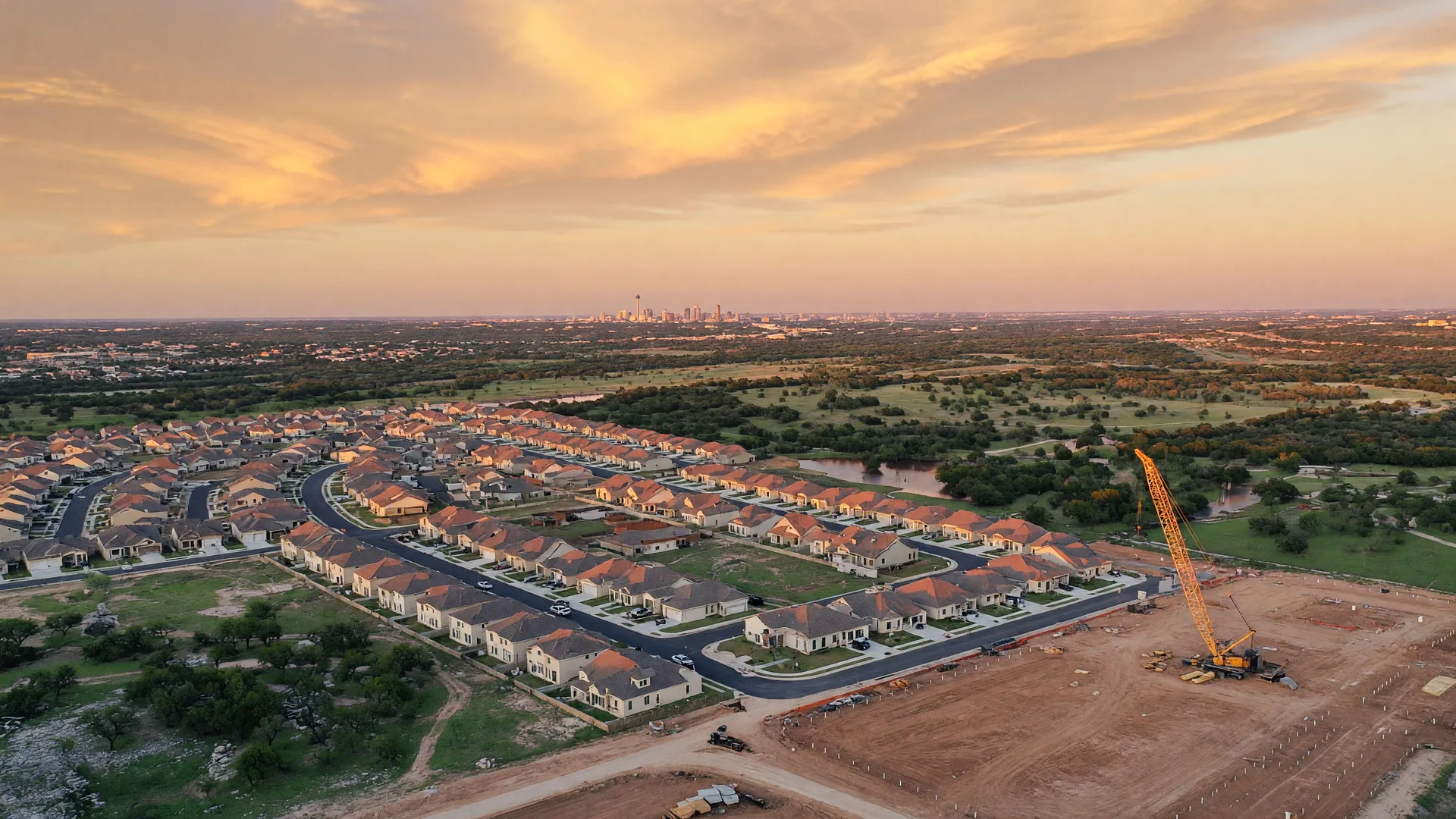
The San Antonio-New Braunfels metro area passed 2.81 million people in mid-2025, after adding an estimated 38,000 residents in a single year, the ninth-largest raw population gain in the country. Growth like that shapes everything about the housing market: where builders build, where prices hold, and where the next wave of buyers lands. Here is what the latest Census numbers mean for your move.
On my channel: San Antonio's Secret Growth Plan: Everything Changing by 2030
The metro just crossed 2.8 million people
The Census Bureau's Vintage 2025 estimate put the San Antonio-New Braunfels metro at 2,813,140 residents as of July 1, 2025, up from 2,774,738 a year earlier. That is about 38,000 new neighbors in one year, a growth rate near 1.4%, and the ninth-highest raw population gain in the United States. For context, that is roughly the size of a small town arriving every single year.
Where the growth is landing
The gains are concentrated in the suburban ring and the Hill Country: Comal County (New Braunfels), Kendall County (Boerne), and Guadalupe County (Schertz and Cibolo) keep posting some of the fastest growth in Texas, while the core city fills in around the newer master-planned communities. For buyers that means the newest inventory, the best new-construction incentives, and the strongest school districts tend to line up along the same corridors north and northeast of downtown: I-10, US-281, and I-35.
What steady growth does to the market
More households means more buyers chasing the homes that already exist, and that is why the affordable range, roughly $300,000 to $450,000, moves fastest even in a balanced market. I keep the running numbers on my market report page, but the pattern is consistent: steady demand in the entry and move-up ranges, more negotiating room at the top end, and new construction stepping in where inventory is thinnest.
The growth is slowing, slightly
The honest headline: the pace is cooling. Axios reported in April 2026 that a dip in immigration is slowing the region's growth, and the 1.4% annual gain is below the torrid years of 2021 and 2022. Slower growth is not a bad thing for buyers. It means less panic, more balanced inventory, and a market where you can compare neighborhoods carefully instead of writing an offer the first weekend.
What this means for where you buy
Two practical rules come out of the data. First, buy where the growth is if resale value matters to you: the north and northeast corridors, Boerne, and New Braunfels have years of demand built in. Second, do not treat 2021 pricing as your baseline; the 2026 market rewards patience, and the right neighborhood for your commute and schools matters more than catching a wave that has already slowed.

Written by Phyllis Domingo
REALTOR® · TX License 745926 · 100+ homes sold · Helping families move well in San Antonio and the Hill Country since long before the hard part became normal.
Have a question about this topic?
Every family's situation is different. Send me a note and I will respond personally, usually within a business day.