
From the Blog
San Antonio Property Taxes vs. Austin, Dallas, and Houston: The 2.27% Reality
On most side-by-side comparisons, San Antonio carries the heaviest property tax load of Texas' four big metros: Texas Tax Calculator's 2025 combined-rate model puts the city at about 2.27% of taxed value, ahead of Dallas at roughly 2.23%, Houston at 2.12%, and Austin at 2.05%. County-level effective-rate estimates from National Mortgage Center's 2026 data rank the same way, with Bexar at about 1.73%, Harris at 1.62%, Dallas at 1.58%, and Travis at 1.48%. For a relocating family, the difference between the top and bottom of that list is a few hundred dollars a year on a typical home, real but not decisive, and it comes with an important caveat: effective rate means different things in different calculators. Here is the honest metro-by-metro picture, and how to compare property taxes in the way that actually predicts your bill.
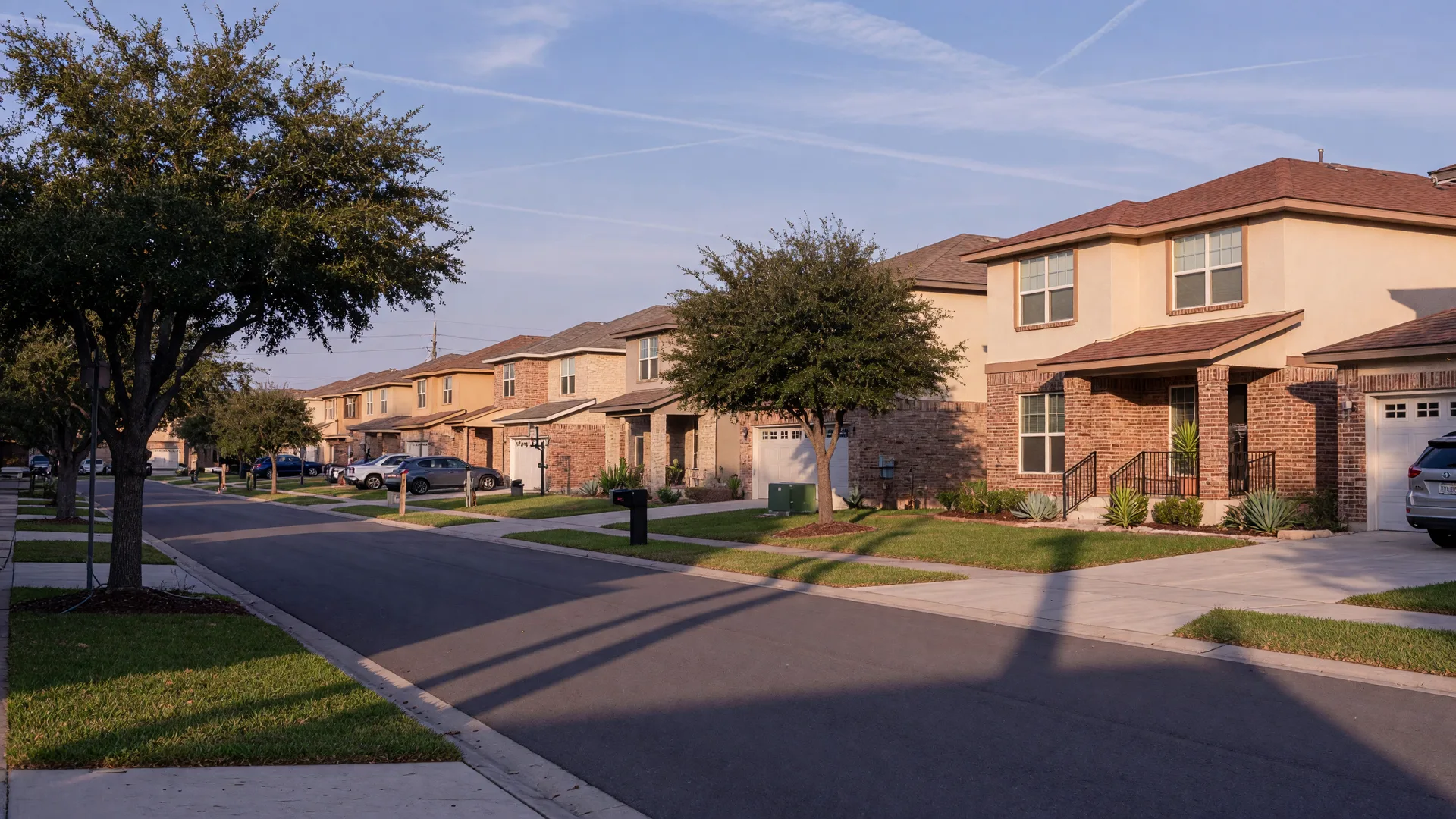
On most side-by-side comparisons, San Antonio carries the heaviest property tax load of Texas' four big metros: Texas Tax Calculator's 2025 combined-rate model puts the city at about 2.27% of taxed value, ahead of Dallas at roughly 2.23%, Houston at 2.12%, and Austin at 2.05%. County-level effective-rate estimates from National Mortgage Center's 2026 data rank the same way, with Bexar at about 1.73%, Harris at 1.62%, Dallas at 1.58%, and Travis at 1.48%. For a relocating family, the difference between the top and bottom of that list is a few hundred dollars a year on a typical home, real but not decisive, and it comes with an important caveat: effective rate means different things in different calculators. Here is the honest metro-by-metro picture, and how to compare property taxes in the way that actually predicts your bill.
Two ways to measure a Texas tax bill
Texas property taxes run on two kinds of numbers. The nominal combined rate is the sum of every taxing unit's rate, city, county, school district, and any special districts, expressed per $100 of taxable value. The effective rate is the total bill divided by a home's value, and calculators compute it on full market value or on taxable value after exemptions, which is why the same county can look like 1.73% in one source and 2.27% in another. Both are true; they are answering different questions. For a homesteaded homeowner, the number that predicts your actual bill is the effective rate on taxable value after exemptions, and that is the number to carry into any comparison.
The four metros, side by side
Using Texas Tax Calculator's 2025 combined-rate model, San Antonio runs about 2.27%, Dallas about 2.23%, Houston about 2.12%, and Austin about 2.05%. National Mortgage Center's county-level effective estimates for 2026 show the same order at lower levels: Bexar 1.73%, Harris 1.62%, Dallas 1.58%, Travis 1.48%. On a $400,000 home at taxed value, the spread from Austin to San Antonio in the combined model comes to about $880 a year, roughly $73 a month, and the effective-rate model shows a similar range. That is the honest scale of the tax gap: real, noticeable, and smaller than the price differences between these markets. In every case the school district is the largest single share of the bill, which is why the ISD on the address, not the city line, drives most of the variation.
Why San Antonio runs at the top
San Antonio's position reflects its mix of taxing units: the city, Bexar County, the school districts inside the city and county, and, in newer suburbs, fresh MUD and utility districts that stack onto the base rate. Austin's lighter percentage is partly arithmetic: high market values in Travis County spread the tax base, so the effective rate on full value comes out lower even when bills are larger in dollars. The practical translation for a buyer is that an address in a new Bexar County subdivision with a MUD can carry an effective rate meaningfully above the 2.27% headline, while an established home in a mature school district can run below it. The address is the only number that matters.
The honest way to compare metros
- Compare on the price you will actually pay. A lower rate on a much higher purchase price costs more; what matters is the total bill on your real budget.
- Read the prior year's bill on the specific home. Every serious contender has a public tax statement, and it shows the exact rate stack and exemptions for that address.
- Apply the exemptions you personally get. Homestead, over-65, disabled, and disabled veteran exemptions all change the effective rate, and relocating families frequently underuse them in year one.
- Ask about MUDs and utility districts before you fall for the subdivision, because they add on top of the base rate and often phase down but never disappear.
- Remember the other side of the ledger: Texas has no state income tax, so the property tax load is partly the trade for that.
What this means for your move
None of this should talk anyone out of San Antonio, and none of it should be ignored. The tax difference between these metros on a typical home is a few hundred dollars a year, about the cost of a dinner out once a month. The bigger financial drivers in a relocation, home price, commute, and the fit of the neighborhood, swamp the tax gap in almost every case. What I do for relocating families is pull the actual tax bill on the homes we shortlist, apply their exemptions, and show the real annual number before an offer, so the tax conversation happens with facts, not headlines.
An informed buyer who knows the bill before the offer is a buyer who never gets surprised at the closing table.
Frequently asked questions
Are property taxes higher in San Antonio than in Austin?
On most comparisons, yes: Texas Tax Calculator's 2025 model puts San Antonio at about 2.27% of taxed value against Austin at about 2.05%, and National Mortgage Center's county estimates rank Bexar (1.73%) above Travis (1.48%). On a $400,000 home the gap is roughly $880 a year, which is real but smaller than the price differences between the metros.
What is the effective property tax rate in Bexar County?
About 1.73% on National Mortgage Center's 2026 estimate, below the roughly 2.27% combined nominal rate that Texas Tax Calculator reports, because the effective number divides the bill by value while the combined rate stacks city, county, and school district rates. A homestead exemption lowers the taxed base, which changes what you personally pay.
How much more do I pay in San Antonio property taxes than in Dallas?
About $160 a year on a $400,000 home at taxed value using the combined-rate model (2.27% versus 2.23%). The county-level effective estimates show a similar small gap. Either way, the difference is a rounding error next to the price gap between the two markets.
Do new San Antonio subdivisions have higher taxes?
Sometimes. Newer suburbs often carry MUD and utility district rates that stack on top of the base city and county rates, so two homes at the same price can carry meaningfully different bills. The prior year's tax statement on the exact address is the only reliable answer, and I pull it on every home we shortlist.

Written by Phyllis Domingo
REALTOR® · TX License 745926 · 100+ homes sold · Helping families move well in San Antonio and the Hill Country since long before the hard part became normal.
Have a question about this topic?
Every family's situation is different. Send me a note and I will respond personally, usually within a business day.